
WHAT KIND OF SHOWER DOOR SHOULD I GET?
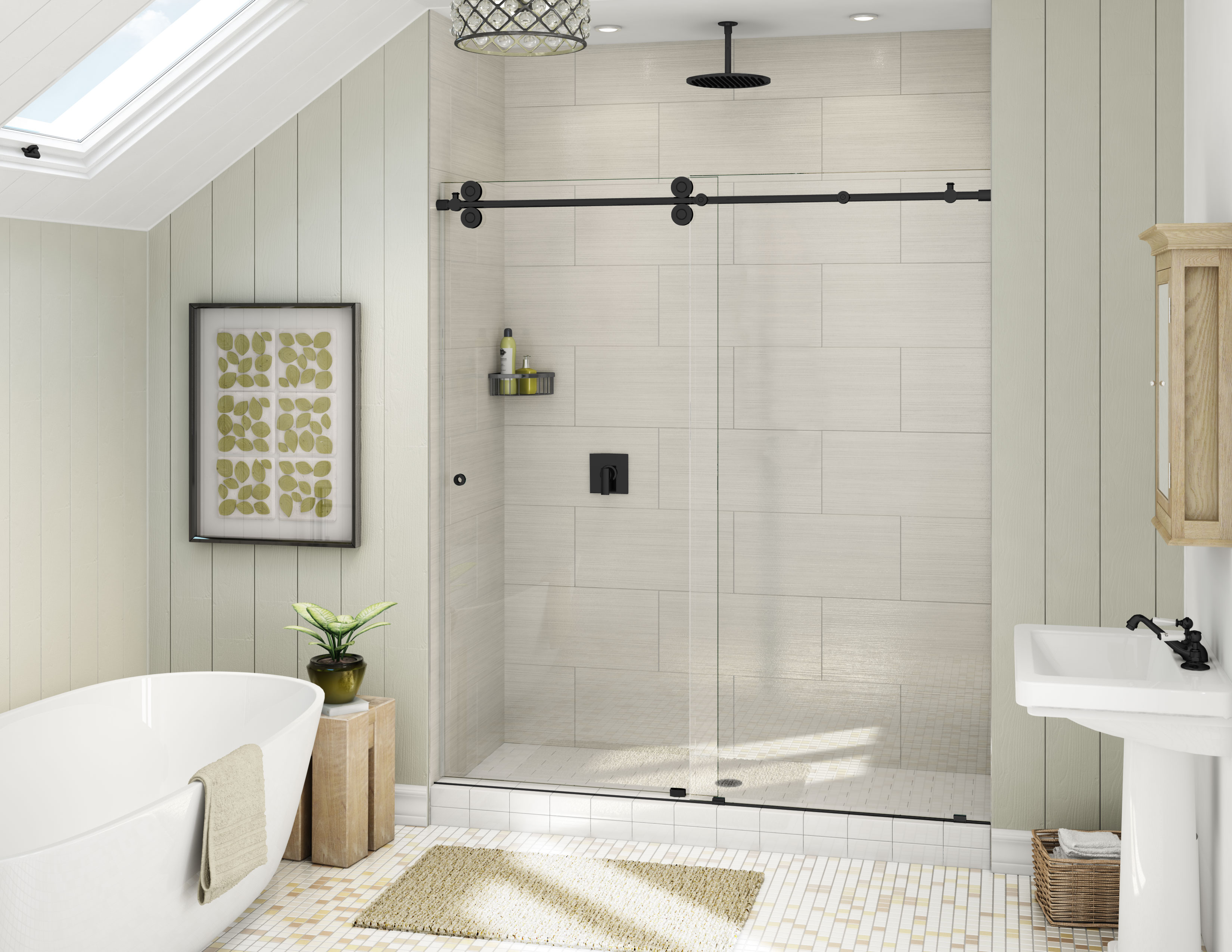 There are so many shower design options on the market that it can be overwhelming for today’s homeowner, but we’re here to help. By learning a few key differences between each shower door type, you will be one step closer to your ideal bathroom.
FRAMED OR FRAMELESS?
FRAMELESS
Many high-end master bathrooms feature large frameless glass shower enclosures. These are constructed with glass that is usually 3/8” to 1/ 2” thick, and a variety of hardware is available to fasten the glass to the surrounding walls, threshold, and/or ceiling.
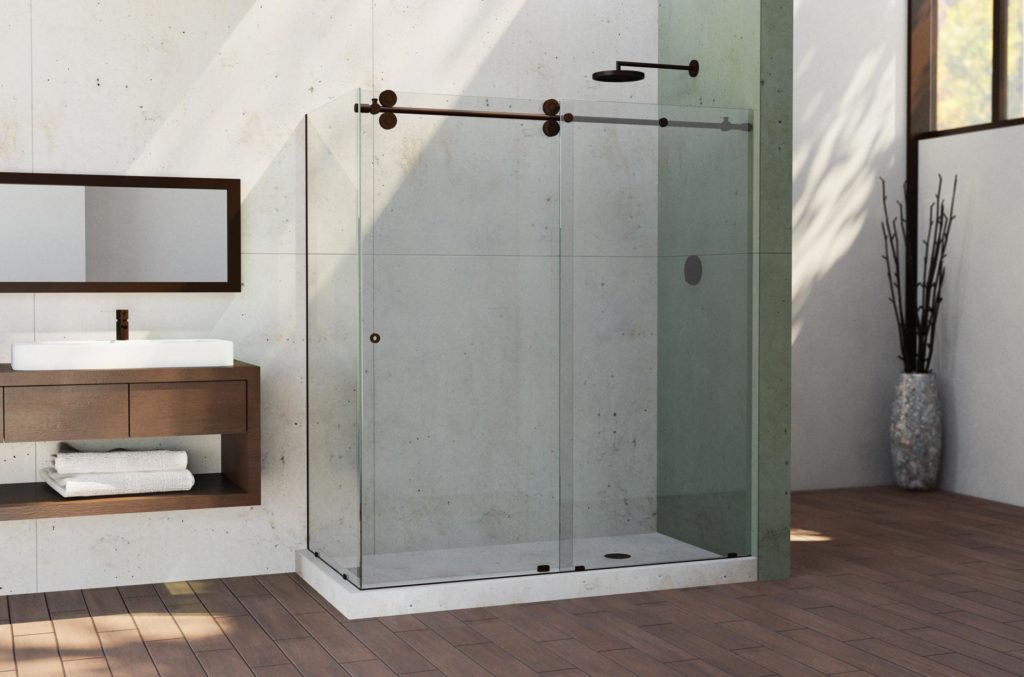
Modern frameless shower doors make a bold statement. They are a great choice for large, expansive shower designs, but since there is no frame around the glass, water can leak or spray through small gaps into the surrounding bathroom in some situations. Clear vinyl seals are available to prevent leakage, but some users feel that this solution can compromise the truly frameless look of heavy glass.
Pros: modern/ high-end look, luxurious feel and operation
Cons: cost, curb width requirements, stud backing requirements
Models: Proline: PL50 PL60 PL70
FRAMED
Framed shower doors have been the traditional choice for decades, and they also work beautifully with many current bathroom design trends. These enclosures are generally framed with aluminum which is finished to coordinate with most bathroom fixtures.
Pros: lower cost, superior leak prevention, adapts to surfaces that are slightly out of level/plumb
Cons: some models lack the high-end feel of frameless
Models: 700C, 791C, 890C (steam door)
SEMI-FRAMELESS - most popular!
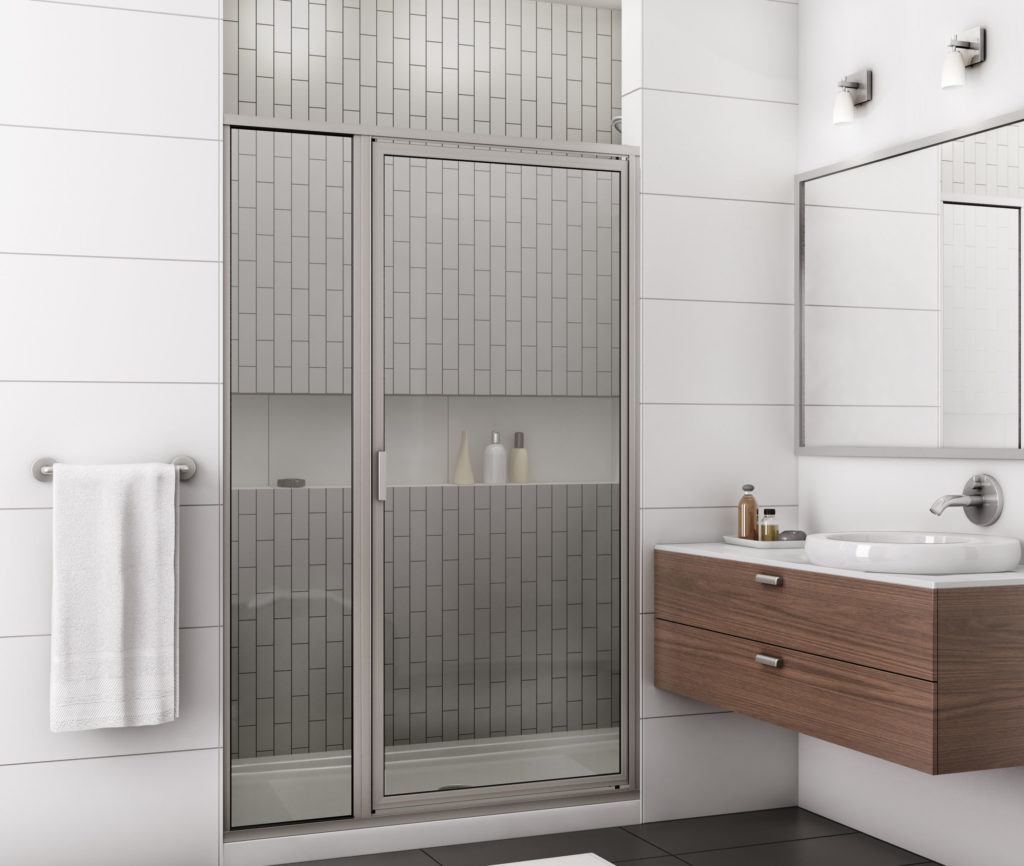
Semi-Frameless Enclosures are like a combination of Framed and Frameless models. Most Semi-Frameless designs have metal framing around the stationary glass panels while the door itself – the movable part of the enclosure – features minimal framing.
Pros: Contemporary styling, leak prevention
Cons: Not a truly frameless design
Models: 340/350, 340D/350D, 1040/1050, 391C, 391CV, 391CV-HG
DOOR OPENING TYPES
The type of door opening can be the most important consideration when choosing a shower door. The size of your shower and the layout of your bathroom can have an impact on the options available to you.
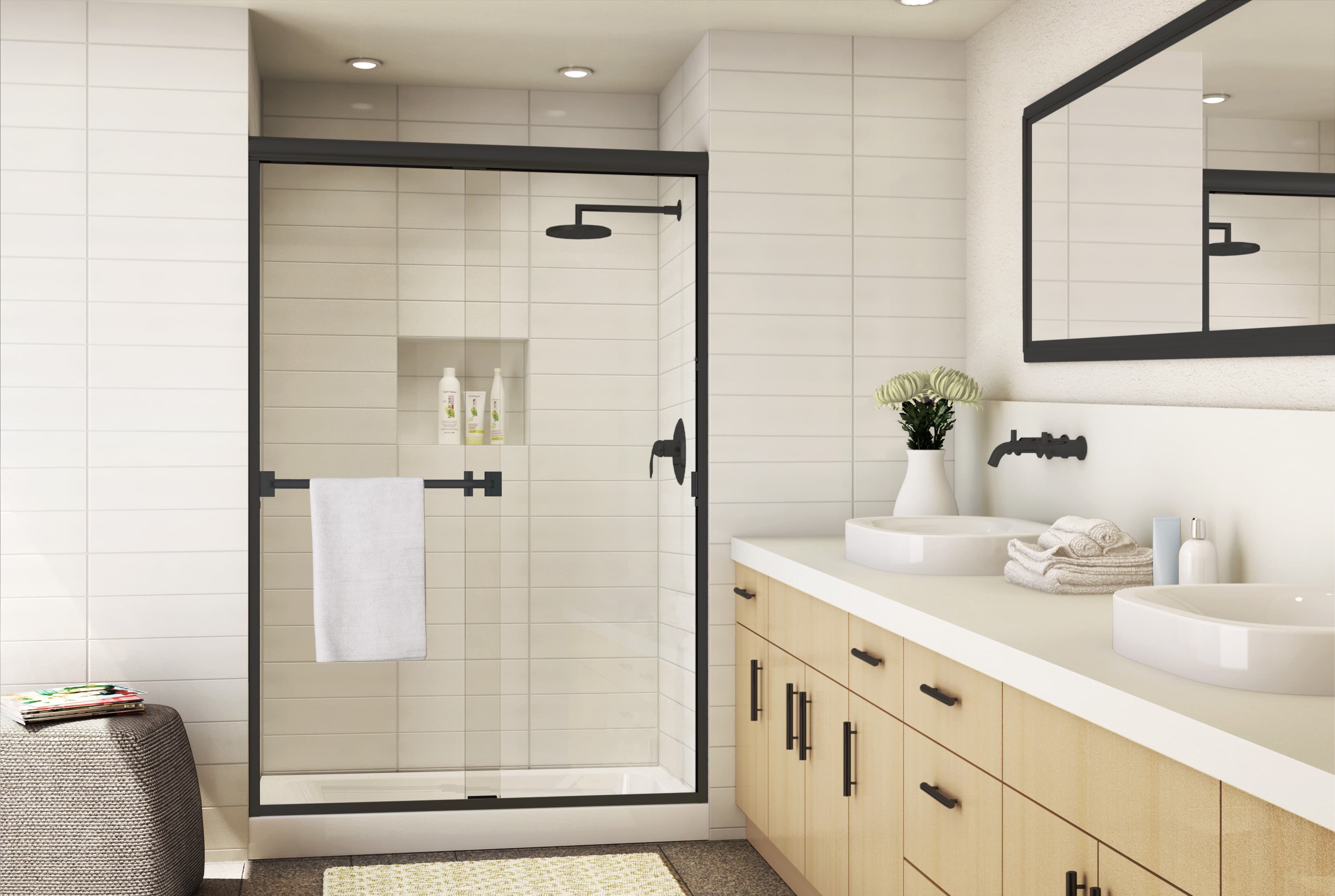
Hinged doors are the most common, but they are incompatible with some bathroom designs. For example, the out-swinging door may be obstructed by a vanity or toilet near the shower. As an alternative, sliding doors can be used in small bathrooms since they need no additional space to open and close.
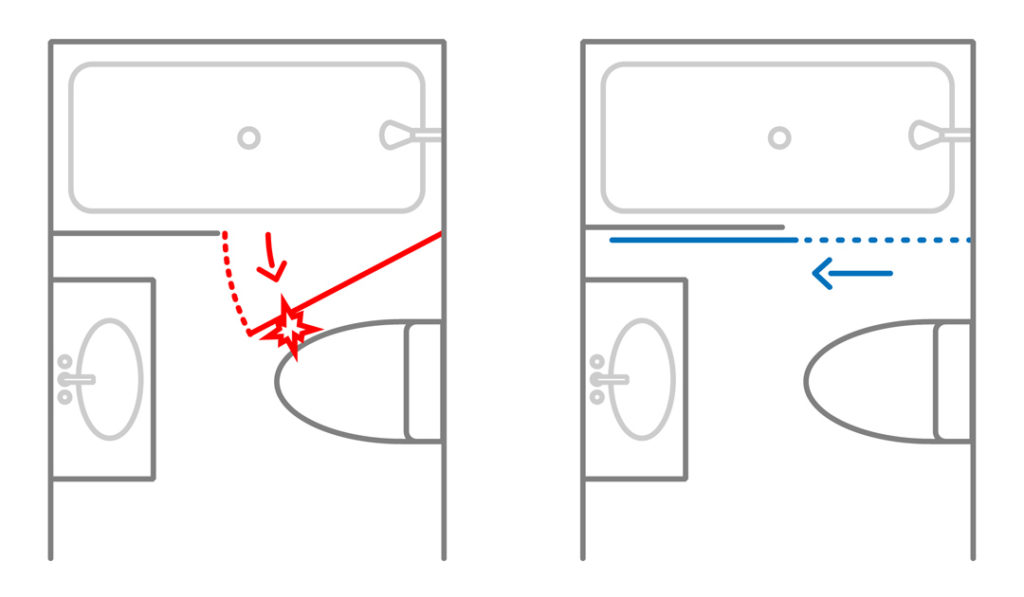
WHEN OBSTRUCTIONS PREVENT THE USE OF A SWINGING DOOR, A SLIDING DOOR IS A GREAT SOLUTION.
Some sliding enclosures feature two glass panels which move independently of each other. These are known as Bypass doors, and they allow the user to enter on either side of the shower or tub.
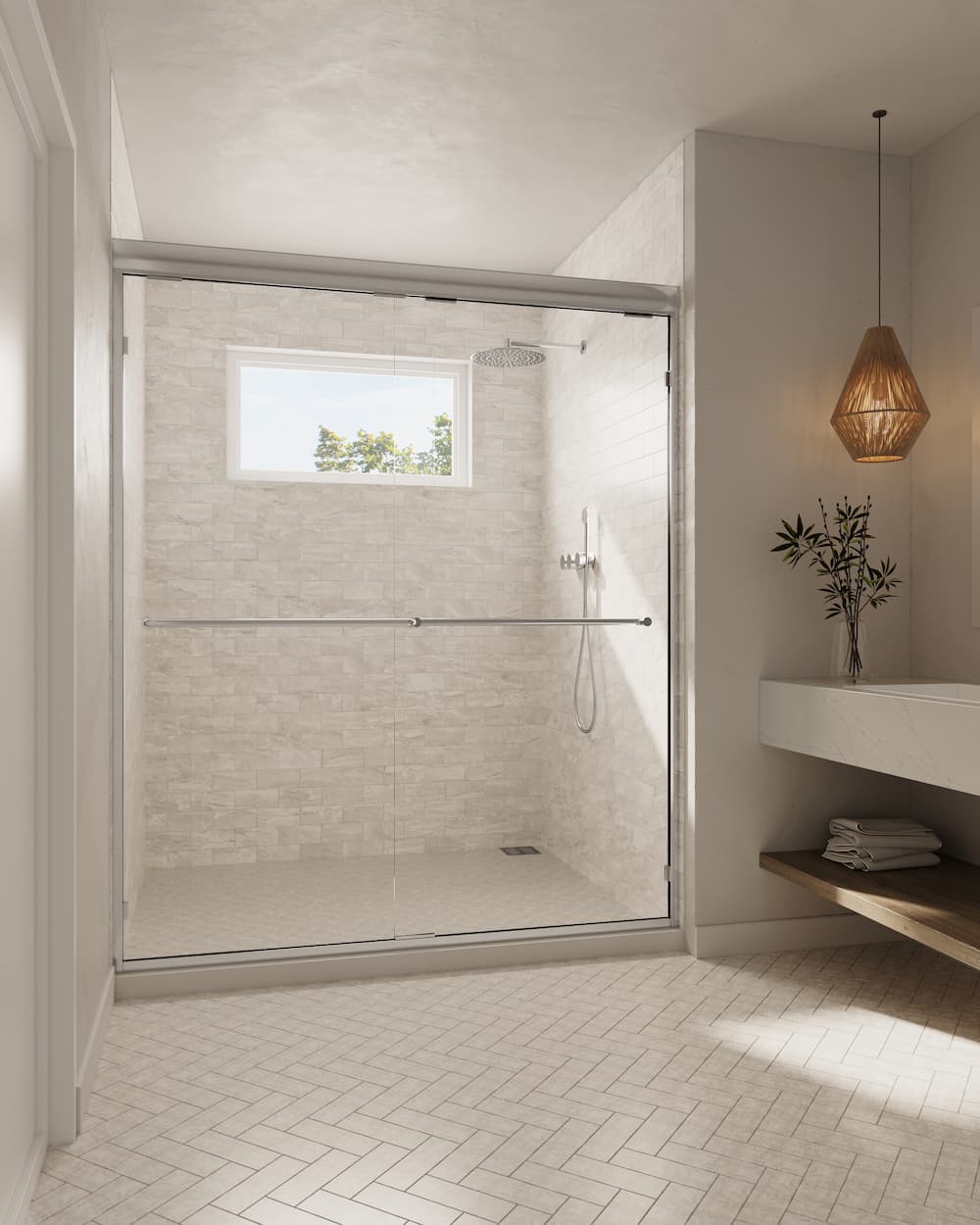
Shower Screens, or Shower Shields, are designed to partially enclose the shower. The placement of the screen prevents water from spraying out into the bathroom. This minimalist approach feels more spacious than traditional enclosure designs.
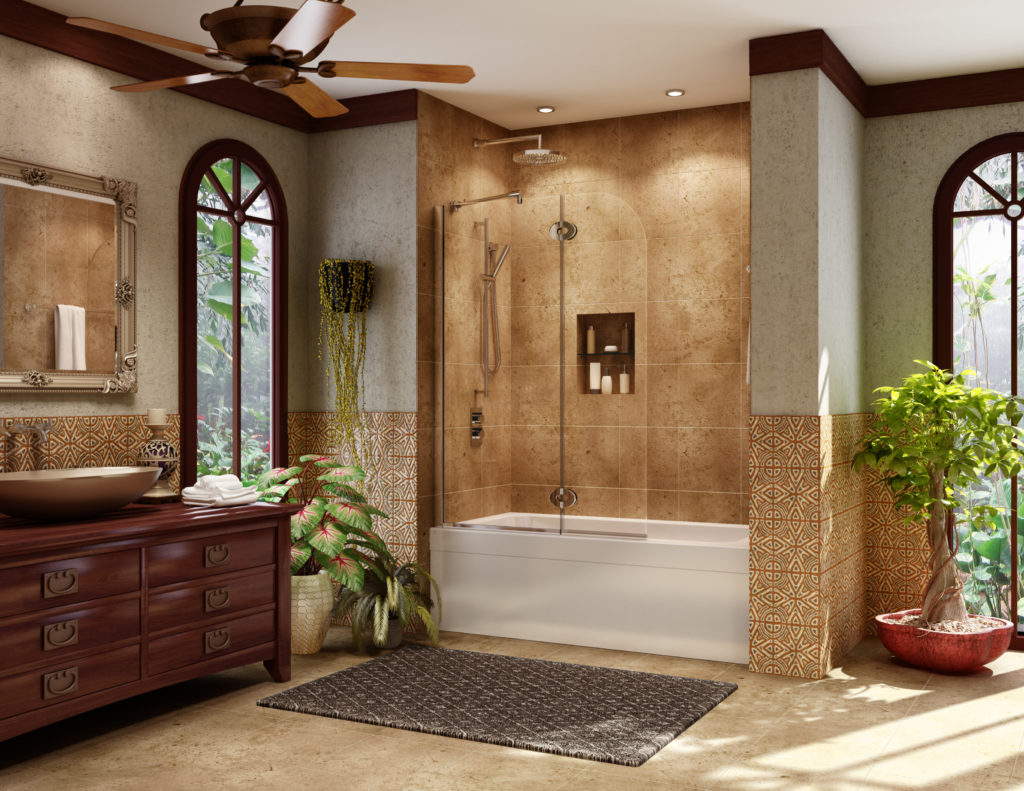
LANI TUB / SHOWER SHIELD
CONCLUSION
When choosing a shower door, it’s important to consider which product offers the functionality you need in addition to the style of your bathroom and the size of your budget.
Frameless enclosures are a great choice for large, high-end bathrooms, while framed doors offer better leak prevention at a lower cost. If you don’t have enough room for an out-swinging shower door, you should consider a sliding enclosure.